
What Exactly is a Timber Frame, Anyway?
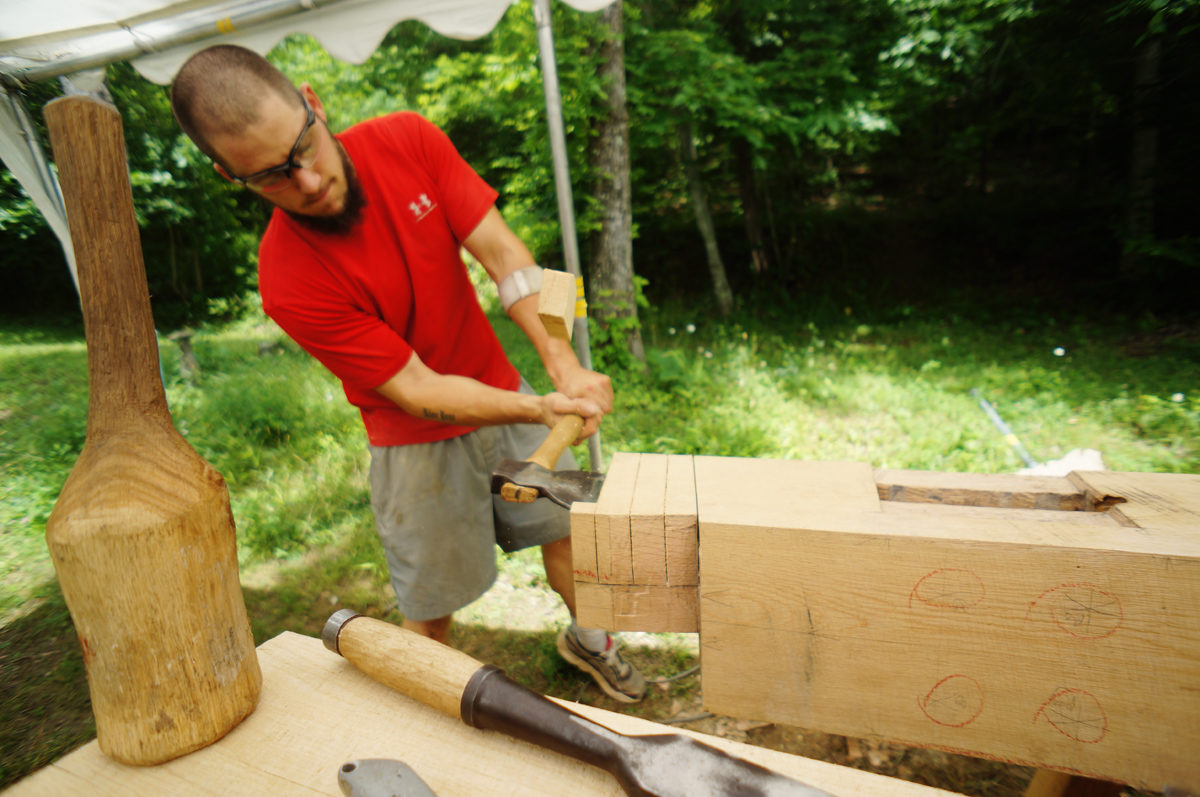
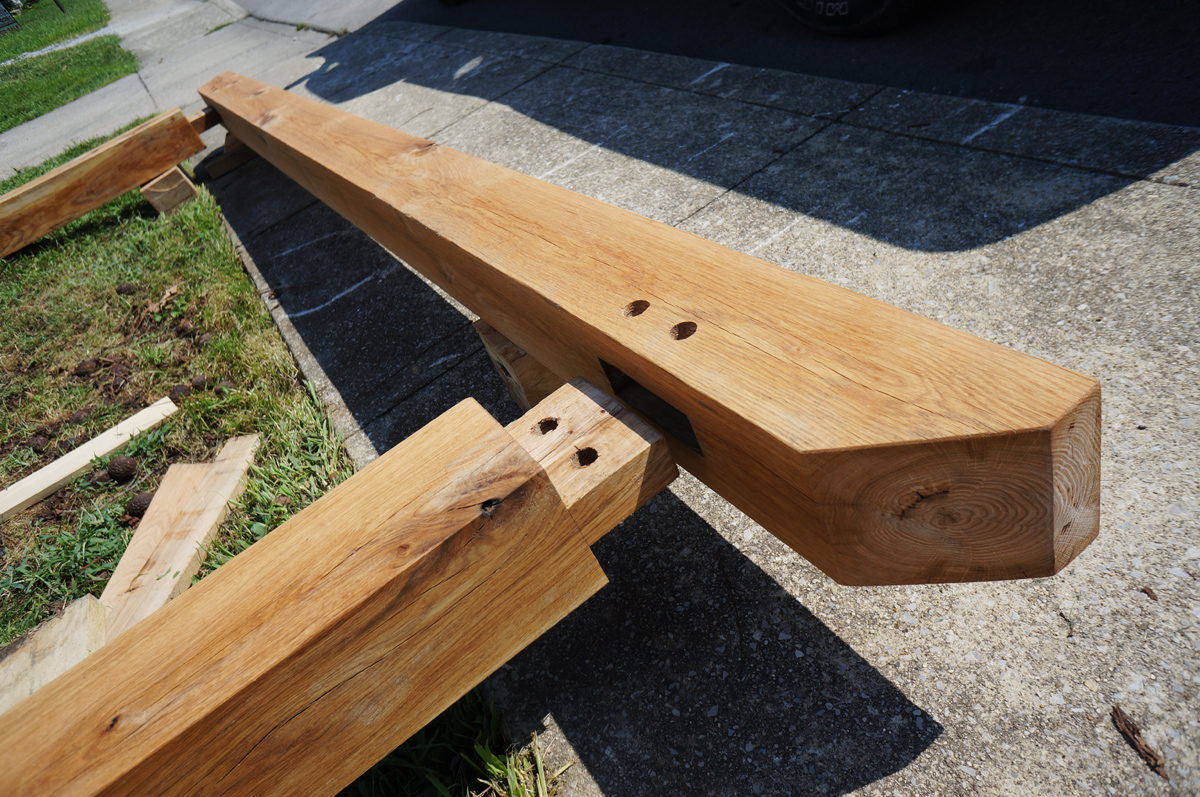
“Timber framing” is the general term for building with heavy, large dimension timbers rather than “dimensional lumber”, including 2×4 studs. Traditional timber frames are created by carefully joining and fitting timbers together with joints (most commonly mortise and tenon) secured with large wooden pegs. Typical timber sizes can include 6x6s, 8x8s, and larger. It is more labor-intense than typical stud framing, but the resulting product is much stronger, more long-lived, and undeniably attractive. It’s a truly ancient method of construction — timber framing has been employed all over the world for thousands of years.
Benefits of a Timber Frame
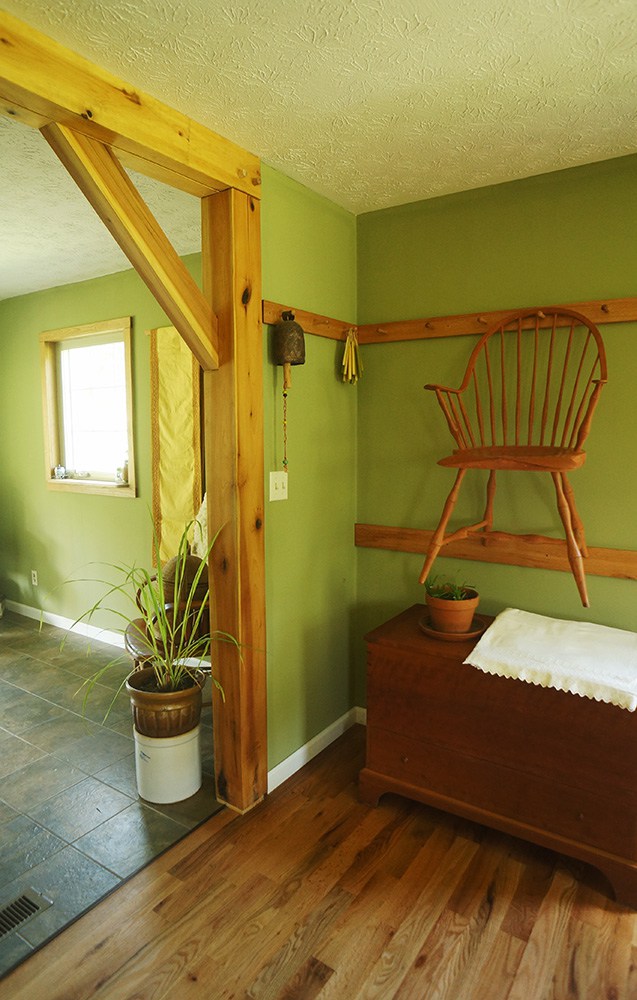
We enjoy timber frames for their beauty and strength. A timber frame is not unlike a scaled up piece of furniture, with intricate and tightly fitting joints. Additionally, this method of construction enables us to use local material — we acquire our timbers from local sawyers. Oak, poplar, and pine are common choices. When we work to cut the joinery, we favor the use of hand tools, which creates a much quieter and safer work site, too. A rundown of benefits include:
- Superior durability and strength, especially compared to a typical stud frame
- Great beauty in the final product — you are likely to want to showcase the frame, rather than hide it behind a wall
- Promotes the use of local materials, saving expensive transportation and energy costs
- Excellent fire resistance ratings
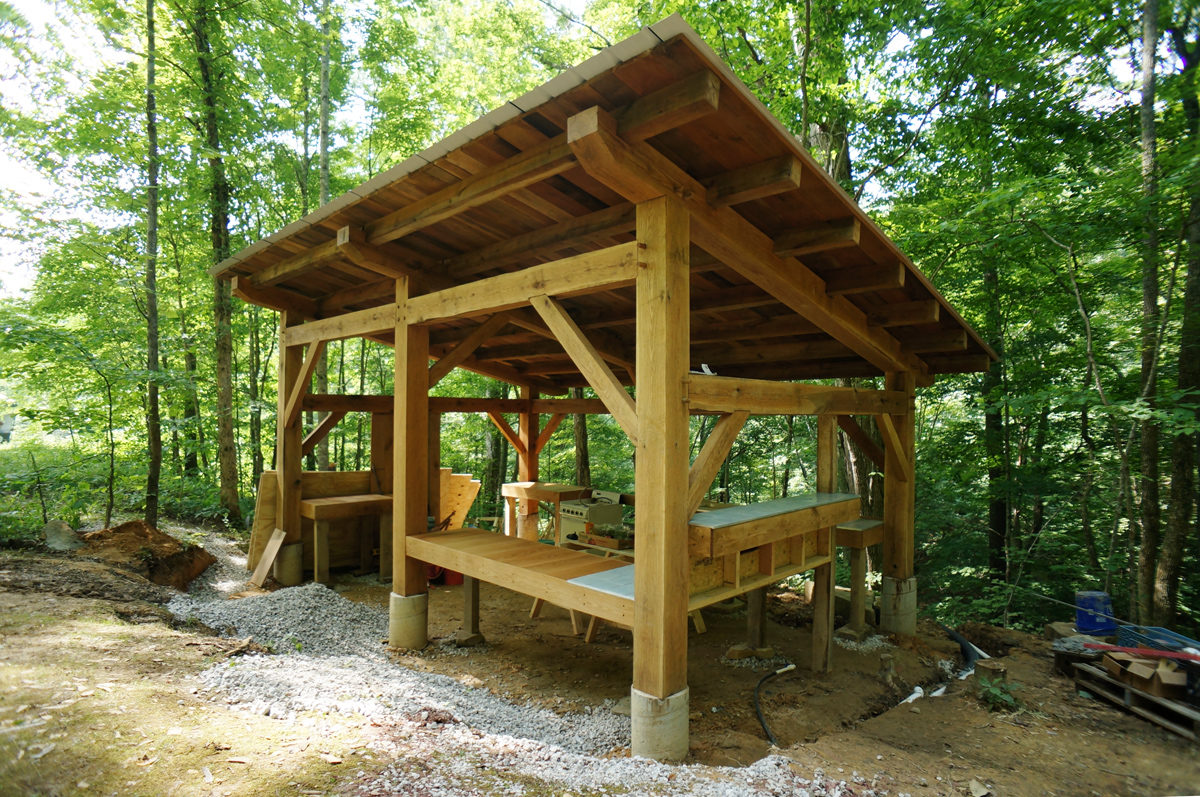
There’s truly no comparison between a 2×4 stud wall and a timber frame — a timber frame has its own distinct and timeless beauty that can be admired by all, whether it’s in the form of a cabin, pavilion, or retrofit inside an existing house.